Kyushu Tourism Organisation

Visit Kyushu

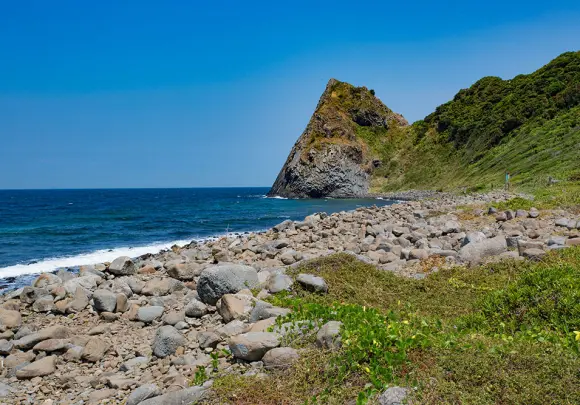
Kyushu is the third largest island of Japan’s five main islands and the most southerly of the four largest islands.  Kyushu is known for warm, humid summers and mild winters, making it easy to visit in all seasons.  It’s an exciting landscape that exists nowhere else, filled with wide plains, relaxing beaches, active volcanoes, abundant hot springs and delicious food.

Kyushu is epitomised by the words Energy, Fertility and Gateway, representing its natural energy and dynamic people, the rich soil that blesses the island with delicious food, and its history as a link between Japan and the world.

It is a land of energy, from its vibrant people to its famous volcanoes. Rich volcanic soil and regular rainfall have contributed to the region’s reputation as a gourmet destination, famous for its citrus fruits, seafood, and rich, pork-based ramen.

Kyushu is closer to Korea than Tokyo but easily reached from every major city in Japan. More than anything, Kyushu is characterized by the friendly people who call this island home. Over a thousand years of connections with other cultures has created a sense of warmth and acceptance, welcoming newcomers with a smile.


Linkd Tourism represents Kyushu in Australia and New Zealand.

Kyushu Regions

Fukuoka Prefecture

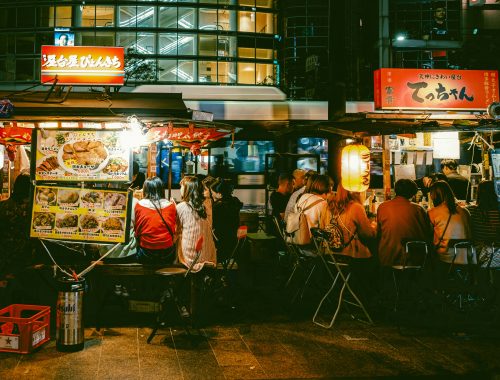
Fukuoka Prefecture is the geographical and historical gateway to Asia: steeped in history, but open to new ideas and cultures. The city is young and vibrant, with a diverse community from around the world. You can enjoy trendy high-end shopping districts and outlet malls or soak up the energy and flavours at lively “Yatai” food stalls. The city of Fukuoka is also steeped in history, home to many ancient shrines and temples including Dazaifu Tenmangu. All along the coast, you’ll find gorgeous beaches and quiet fishing towns, famous for their local produce of shellfish and fresh oysters.
Saga Prefecture

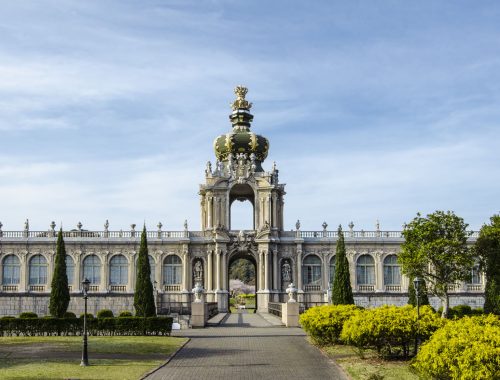
Saga Prefecture is a small prefecture with a large cultural impact, Saga is rich in history, craft, and food. Saga is particularly famous for its exquisite crafts including the blue and white hues of Imari and Arita pottery. No visit to Saga is complete without a stop at the stunning Arita Porcelain Park where visitors can join a class to make their own porcelain – which is later shipped to your home for safe travel. Other key stops include a visit to the picture-perfect gardens of Mifuneyama Rakuen and the imposing Yutoku Inari Shrine.
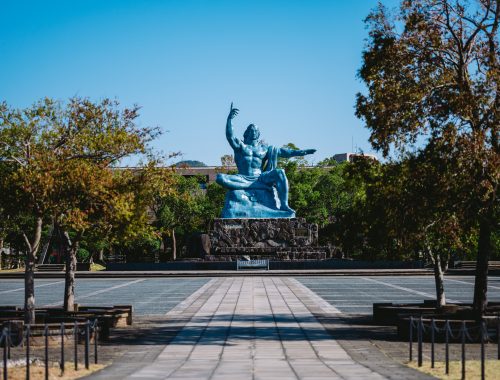
Nagasaki Prefecuture

Nagasaki Prefecuture’s turbulent past, from Christian Samurai martyrs to the atomic bomb, has created a remarkable culture of peace and tolerance. Outside the city centre, you can cruise the beautiful Kujukushima Islands near Sasebo or relax in the hot springs around Unzen. Or for history and movie buffs, there’s also Gunkanjima, known as Battleship Island. Once a significant undersea coal mine, the island supported a thriving, high density population with apartments, schools and shops. When the coal reserves ran out in 1974, the mine was shut down and the metropolis on top of it was quickly abandoned. It was designated a World Heritage Site in 2015 and made famous for being the backdrop to a key sequence in the Bond movie, Skyfall.
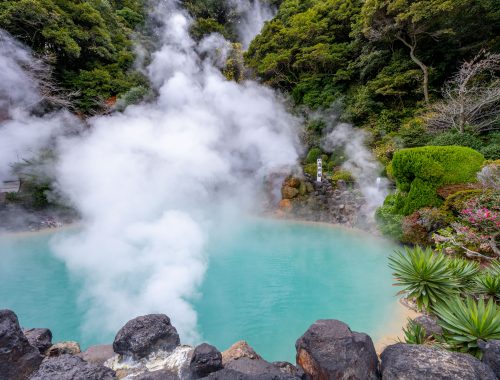
Oita Prefecture

Oita Prefecture, on Kyushu’s east coast, is famous for its hot-spring towns, notably Beppu and Yufuin – home to the most hot springs (onsen) in all of Japan. But it also has several charming castle towns, including Kitsuki and Taketa, where history is brought to life through festivals and events. Oita has a beautiful, rich and lush countryside that ranges from intricately eroded coastlines dotted with islands, peninsulas, and inlets to the wide, sweeping Beppu Bay. Inland, the region is dotted with elegant valleys, high plateaus, soaring mountain ranges, and active volcanoes making this region perfect for moderate adventure seekers looking to enjoy the great outdoors.
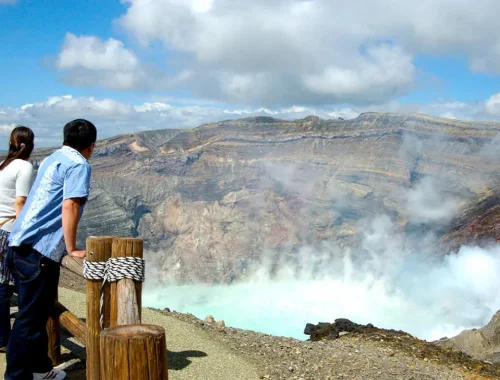
Kumamoto Prefecture

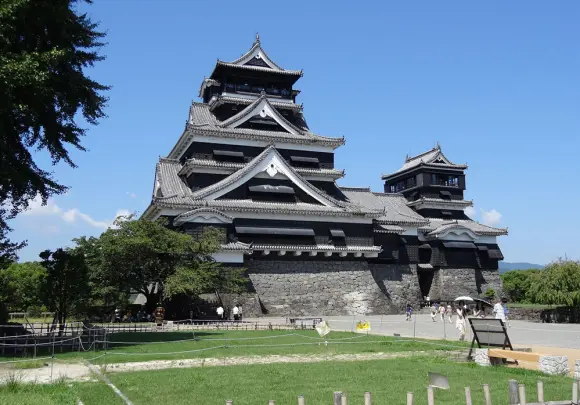
Kumamoto Prefecture is symbolized by two powerful landmarks: Kumamoto Castle in the city and Mt. Aso, Japan’s largest volcano, further inland. The forces of nature have formed the land and forged the region’s fighting spirit. Mt. Aso in Aso-Kuju National Park, is not only Japan’s largest volcano, it’s also Japan’s most active. The huge caldera stretches 24 kilometres from north to south, surrounded by five peaks known collectively as Aso Gogaku. Close to Mt. Aso, you can relax in the hot springs of Kurokawa Onsen. Just off the coast, the idyllic Amakusa Islands have a fascinating history of Christianity to explore.
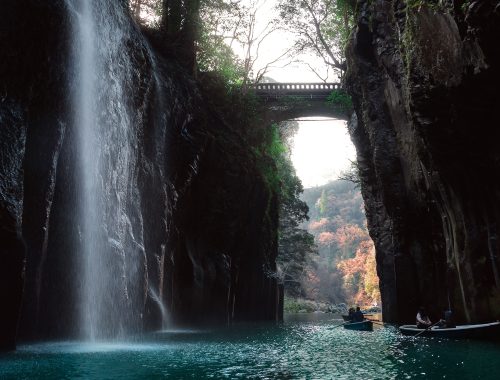
Miyazaki Prefecture

Miyazaki Prefecture’s landscapes are defined by a long stretch of coast lined with golden beaches and spectacular rock formations. With temperate weather and great surfing, the Nichinan Coast is a popular getaway. Miyazaki is considered a home of the gods, with ancient legends told through Kagura dance. Dense forests, dramatic gorges and hidden mountain villages take you back to those storied times. One of Miyazaki, and in fact, all of Japan’s most famous sites is the spectacular Takachiho Gorge. Formed over 100,000 years ago after eruptions from nearby volcano Mt. Aso, the gorge’s 80-100 metre-high basalt cliffs line a chasm, just 3 metres wide at its narrowest point and the gorge’s lush upper canopy is awash with vivid greenery in early summer and red-tinted leaves in autumn.
Kagoshima Prefecture

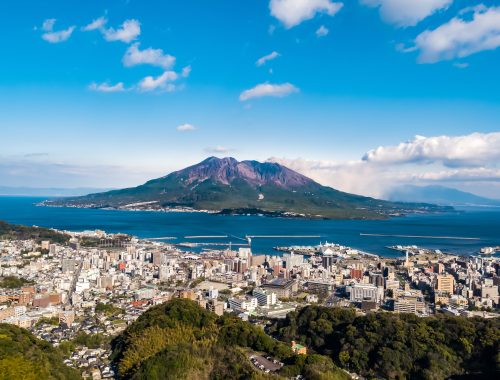
Kagoshima Prefecture is often defined by its stunning islands, starting with the imposing Sakurajima, an active volcano which dominates the skyline of Kagoshima City and continuing further south to Yakushima and Amami Oshima. Kagoshima has been shaped by the power of nature and its energetic people, including Saigo Takamori, one of Japan’s most famous samurai. Kagoshima is a beautiful land of contrasts, and the prefecture extends beyond the Kyushu mainland to the island of Yakushima, filled with ancient forests, and to the tropical islands around Amami Oshima, a newly designated UNESCO World Heritage Site. The island of Yakushima is off the southern coast of Kagoshima and has a unique eco system which saw it declared a natural World Heritage site in 1993. The island has the highest mountain in Kyushu, dense, primeval cedar forests, and quiet beaches. Here you can take a leisurely stroll, forest bathe, or hike through the ancient forests.

Kyushu FAQ

Kyushu is the third-largest island of Japan, located in the southwestern part of the country. It is bordered by the East China Sea to the west, the Pacific Ocean to the south, and the Sea of Japan to the north. It is known for its rich cultural heritage and natural beauty.

The best time to visit Kyushu is during spring (March to May) when the weather is mild and flowers such as cherry blossoms are in bloom. Autumn (September to November) is also ideal for pleasant temperatures and vibrant foliage. Summer (June to August) can be hot and humid, while winter (December to February) is cooler but less crowded.

Each prefecture on Kyushu has its own airport; however, direct flights are not available from Australia, so the best access is either to transit via major Japanese hubs like Tokyo or Osaka, or through international hubs such as Taipei, Seoul and Singapore. The total journey typically takes around 10-14 hours, including layovers.


Fukuoka Airport (FUK) is the main air gateway to the island for either domestic or international routes.


There are also ferry options to reach Kyushu from mainland Japan (such as Tokyo, Osaka and Kobe), Shikoku Island and Okinawa, as well as international ferries to Busan (South Korea).


For domestic travel, you can also reach Fukuoka by highway bus. Most buses travel overnight, departing major cities including Tokyo and Osaka in the evening and arriving in Fukuoka in the morning.

The best way to get around Kyushu is by using the Kyushu Shinkansen (bullet train) for fast and convenient travel between major cities. For exploring rural areas, consider renting a car or using local buses and trains. Public transport is efficient and well-connected across the island.


To learn more about the transportation options available, visit: https://www.visit-kyushu.com/en/plan-your-trip/getting-around/

Must-dos in Kyushu include visiting Fukuoka’s bustling Nakasu district, exploring the volcanic landscapes of Aso, and soaking in the hot springs of Beppu and Kurokawa Onsen. Don’t miss the historic city of Nagasaki and Kumamoto, and the beautiful coastal scenery of Kagoshima, including views of Mount Sakurajima.

Kyushu covers approximately 34,000 square kilometres (13,000 square miles), making it the third largest island in Japan. It features diverse landscapes, including mountains, volcanoes, and coastal areas, providing a wide range of experiences from urban exploration to natural adventures.

The main airports in Kyushu are Fukuoka Airport (FUK), which serves as the primary international gateway, and Kagoshima Airport (KOJ) and Kumamoto Airport (KMJ), which handle domestic and some international flights. These airports connect Kyushu to other major cities in Japan and international destinations.

A recommended stay in Kyushu is around 7 to 14 days. This duration allows you to explore major cities like Fukuoka and Nagasaki, enjoy the natural beauty of Aso and the hot springs in Beppu, and experience the unique culture and scenery of the island.

Tipping is not customary in Kyushu or Japan as a whole. Exceptional service is expected as part of the job. Instead, focus on showing appreciation through polite behavior and gratitude. In Japan, excellent service is a standard part of the experience in restaurants, hotels, and other services.

For more information about Kyushu, contact the Kyushu Tourism Organisation local representative Sally at [email protected] (she speaks English and Japanese) or visit their official website. Local tourist information centres in cities like Fukuoka and Nagasaki can also offer assistance.

FOR TRADE PARTNERS

Visitor Guides

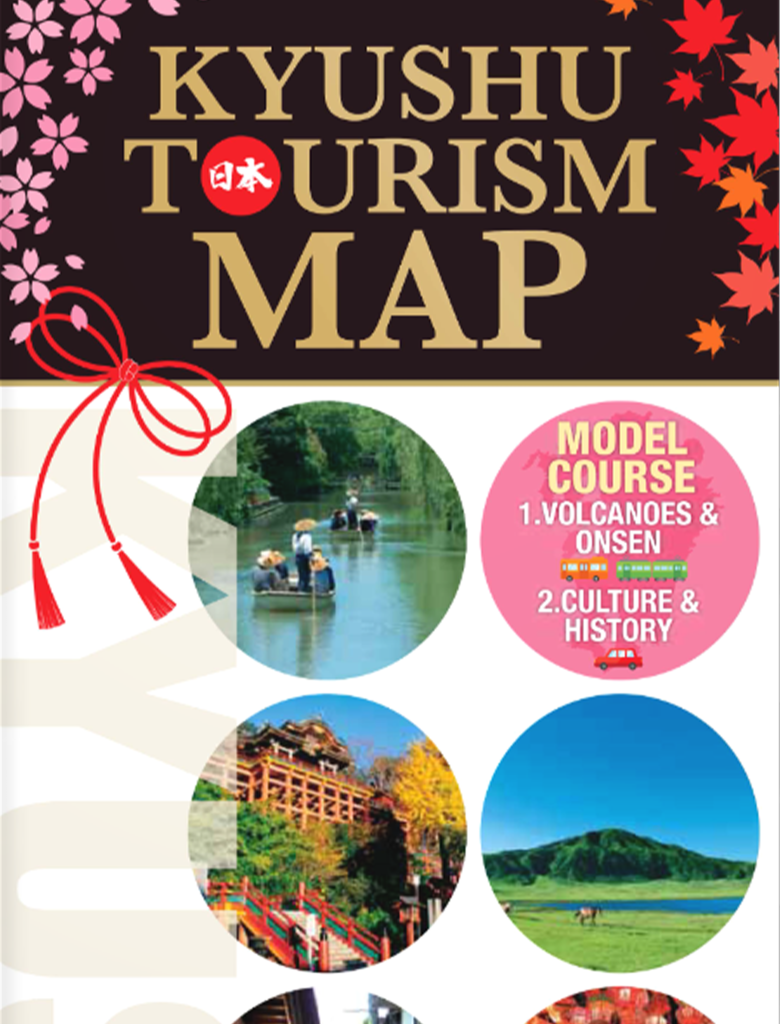
Click on the images below to view the Kyushu visitor guide online.

Webinar

Our advanced webinar will take you on journey to learn about the cultural experiences and outdoor adventures that you discover on this incredible island. 

Itineraries

FOR MEDIA PARTNERS

Media Library

This library of high-resolution photos is available for promoting Kyushu as a leisure destination or in a news story. The Kyushu Tourism Organization must be credited.


https://komc.visit-kyushu.com

Social Media

Contact Us

For further information please contact:

Chris Hall – Account Director, Australia and New Zealand

P: +61 409 862 857

E: [email protected]


Sally Miles – Account Manager, Australia and New Zealand

P: +61 499 035 657

E: [email protected]